Cet article My child is anxious. How can I help ? est apparu en premier sur Bfly.
]]>Here is a list of 8 tips that can help manage your child’s anxiety.
Facing your fears
Avoiding anxiety-provoking situations keeps the anxiety running. When a child faces his fears, he learns that he can dare to excel and believe more in his abilities to do it again. He will also see that the fear he had was actually less scary and dangerous than he thought.
Be imperfect
It is important to accept the mistakes and imperfections of your child. While encouraging your child to work hard is just as important, trying to perfect will negatively affect his perception of himself.
Be positive
Anxious and stressed children can get lost in negative and self-critical thoughts. The more you are able to focus on the positive attributes of your child and the good sides of a situation, the more it will become natural for him to concentrate on the positives.
Lead by example
Your child will do like you do; if you avoid anxiety-provoking situations, he will do the same. When you think about the psychological well-being of your child, think of yours. Face your fears and, above all, take care of yourself. Your child will learn that self-love is an important part of life.
Reward courageous behaviors
When your child faces his fears, reward him with a compliment, a hug, or something like a sticker or a small treat. By rewarding courage, your child will be more likely to adopt this behavior again.
Encourage him to express himself
When your child is worried or frightened, do not say “no, you’re fine!”; this will not help your child and encourage him to keep his worries to himself. Instead, say something like “yes, you seem worried. What worries you?”. Talk to him about his emotions and fears.
Help solve problems
After validating your child’s emotions and showing that you understand his concerns, help him solve his problem. This does not mean to solve it for him, but rather to help identify possible solutions. If your child is big enough to generate solutions, let him do so. If he is still too young, generate possible solutions for him and ask him to choose the solution he thinks is the best.
Practice relaxation exercises
Sometimes, relaxation exercises are needed to help your child reduce stress and anxiety. You might ask him to take a few slow, deep breaths, to imagine being somewhere like the beach or a peaceful place he loves, or just suggest him to relax in a hammock in the back yard. You could also practice family yoga.
Cet article My child is anxious. How can I help ? est apparu en premier sur Bfly.
]]>Cet article Coloring pages with coloured outlines est apparu en premier sur Bfly.
]]>Click on the image above and print it on a 8.5 x 11 inches page.
Cet article Coloring pages with coloured outlines est apparu en premier sur Bfly.
]]>Cet article Coloring pages with coloured outlines est apparu en premier sur Bfly.
]]>Click on the image above and print it on a 8.5 x 11 inches page.
Cet article Coloring pages with coloured outlines est apparu en premier sur Bfly.
]]>Cet article Coloring pages with coloured outlines est apparu en premier sur Bfly.
]]>Click on the image above and print it on a 8.5 x 11 inches page.
Cet article Coloring pages with coloured outlines est apparu en premier sur Bfly.
]]>Cet article Coloring pages with coloured outlines est apparu en premier sur Bfly.
]]>Click on the image above and print it on a 8.5 x 11 inches page.
Cet article Coloring pages with coloured outlines est apparu en premier sur Bfly.
]]>Cet article Coloring pages with coloured outlines est apparu en premier sur Bfly.
]]>Click on the image above and print it on a 8.5 x 11 inches page.
Cet article Coloring pages with coloured outlines est apparu en premier sur Bfly.
]]>Cet article Coloring pages with coloured outlines est apparu en premier sur Bfly.
]]>Click on the image above and print it on a 8.5 x 11 inches page.
Cet article Coloring pages with coloured outlines est apparu en premier sur Bfly.
]]>Cet article My Child Fears Everything est apparu en premier sur Bfly.
]]>Moreover, some children are naturally more fearful than others: it’s part of their personality. These are mostly children from 3 to 6 years old because their ability to imagine frightening situations and remember them increases during this period.
MAKING HIM FEEL SAFE
It is important to sit down with him and discuss his fears.
Remember that his fear is real, even if you do not really know what frightens him or even if you think it should not scare him. You must take it seriously. Saying : “Do not be ridiculous! This is only a clown!” will not help him overcome his fears. Instead, you can get away from the situation with your child to make him feel secure and observe it with him. You can talk to him about what the clown is doing, the reactions of other children, the different aspects of his disguise, etc.
One should never force a child to face something that scares him before he is ready to do it. When you feel that your child is able to confront his fears, encourage him gently, putting him gradually into contact with what terrifies him.
If you seem worried when your child panics, it may be that you accidentally renforce his fears, giving the impression that there really is something to worry about. Sometimes, all you need to do is to comfort him in the appropriate language for his age, speaking in a calm and reassuring tone.
Prepare your child for things that you think might scare him. For example, if you plan to visit a friend who has a dog, talk about the animal before arriving to the location. Reassure him, saying, “This dog is nice and loves children.”
Keep reminding your child about the things he is no longer afraid of. This will help him to feel more confident and realize that he can overcome other fears.
FREQUENT FEARS
He is afraid to get away from you
These reactions are often associated with separation anxiety. Ask yourself if you are not overprotecting him. Do you tend to worry when he leaves to play at the park? If this is the case, he feels it and reacts accordingly.
What to say : “You have nothing to fear, you can go away, I’m looking at you.”
He is afraid of the dark
Again, fear related to separation anxiety plays an important role. It is therefore essential to reassure him. You can give him a small nightlight and organize rituals you repeat every night.
What to say : “You can rest without worry, we are nearby and we take care of you.”
He is afraid of noises
Unusual noises can awaken anxieties related to facing the unknown. Do not make fun of his fears and explain why he has nothing to worry about. Be careful not to isolate him from these noises. Whatever the cause of his anxiety is, avoidance helps to strengthen those fears.
What to say : “I’m vacuuming to clean the house, do not worry, it’s normal for it to make noises.”
Cet article My Child Fears Everything est apparu en premier sur Bfly.
]]>Cet article Teaching Your Child To Take Turns The Fun Way est apparu en premier sur Bfly.
]]>Learning to wait for turns is learning respect for others : the key to harmonious interactions with peers, whether at home or at daycare. For a young child, this can be particularly difficult, especially at first : yet if your child understands the concept, it will also be easier to respect rules.
Your child is too young? Know that you can start teaching your children from four months old! For example, you could take a plushy and kiss it, taking turns. A kiss for mom and a kiss for baby. “My turn, your turn!” The older your child gets, the more complex the little games should become.
TEACHING YOUR CHILD TO TAKE TURNS THE FUN WAY
At first, children are more focused on themselves and time is relative. To learn how to take turns, your child will need your support and your help.
Choose games your child will have an interest for.
The first few times, limit the number of participants to two: this way, turns will come frequently and anger or loss of interest in the game will less likely to happen.
To help, you can use a gesture or object to indicate whose turn it is.
Emphasize efforts. Tell your child that you understand it can be difficult to wait when we want to play, but that you can see he is working hard to do so and that you are proud of him.
Limit the games to 5-10 minutes, unless your child is being very positive and likely to continue.
GAMES TO HELP UNDERSTAND THE CONCEPT OF TAKING TURNS
FROM AGE ONE
Love Attack : take a plushy and kiss it, taking turns. A kiss for mom and a kiss for baby. “My turn, your turn!”
Bounce Ball : sitting on the ground, legs apart, have fun pushing the ball to the other person with your hands, taking turns.
Reading Duo : turn the pages of a book, taking turns. “One page for dad, one for you!”
FROM AGE TWO
Pile Of Hands : put your hand on the table saying “My turn!”. Ask your child to put his hand over yours and say “Your turn!”, and so on. Remove the hand underneath when the two hands are taken.
FROM AGE THREE
Group Work Art: draw on a sheet taking turns. Once the drawing is finished, applaud!
Hat Leader: players mimic the gestures of the one who wears the hat. After 3 actions, it’s someone else’s turn.
Cet article Teaching Your Child To Take Turns The Fun Way est apparu en premier sur Bfly.
]]>Cet article Dress Up As Your Favorite Character : Printable Paper Masks est apparu en premier sur Bfly.
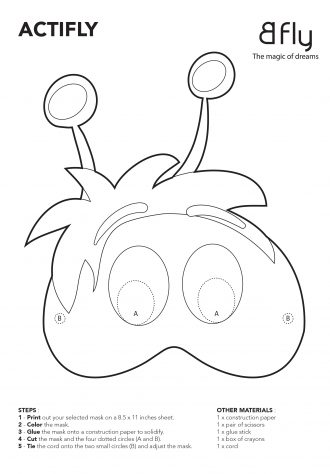
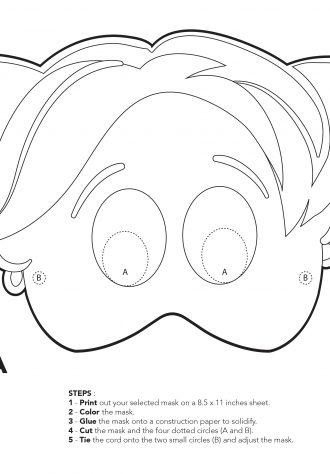
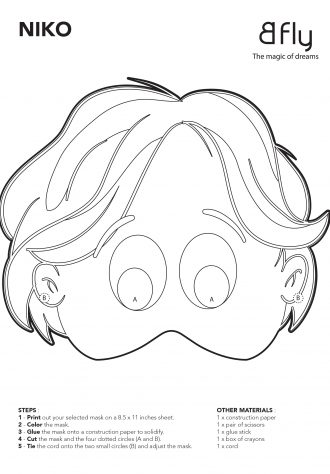
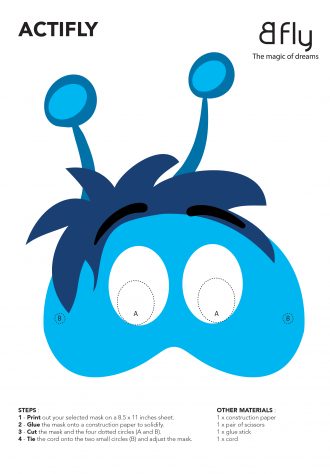
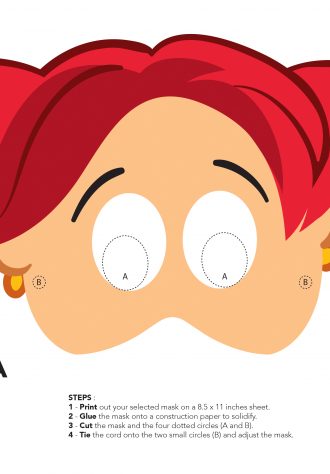
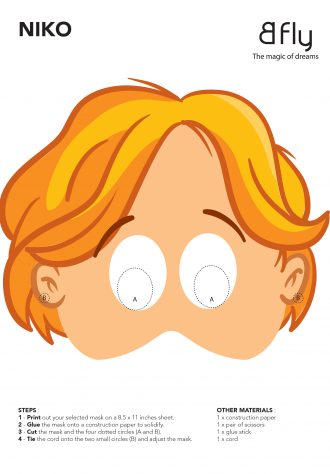
]]>STEPS :
1 – Print out your selected mask on a 8.5 x 11 inches sheet.
2 – Color the mask.
3 – Glue the mask onto a construction paper to solidify.
4 – Cut the mask and the four dotted circles (A and B).
5 – Tie the cord onto the two small circles (B) and adjust the mask.
OTHER MATERIALS :
1 x construction paper
1 x pair of scissors
1 x glue stick
1 x box of crayons
1 x cord
Cet article Dress Up As Your Favorite Character : Printable Paper Masks est apparu en premier sur Bfly.
]]>